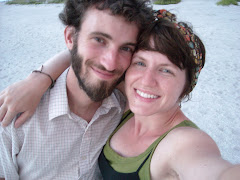
I know we're supposed to be living a rural life here in Haiti without the luxuries most people have, but every once and awhile we find ourselves in the 21st century. We do have the internet in our office, and we use it just about every day. We did, however, feel like news was getting lost in the shuffle. When Obama took office (he is our new president, right?) we didn't have a TV and the internet was down so we missed all the news surrounding his inauguration.
In our quest to be just a bit more connected to the rest of the world we turned to radio. Make that satellite radio. We now have news, music and lots of stations I will never listen to, but my oh my I didn't realize how much I missed NPR until we sat down last Sunday and listened to This American Life, Wait Wait Don't Tell Me, and Car Talk all in a row. It was amazing. I don't want to sound like a commercial or anything, and in the U.S. I had no need for such a device, but our new little radio is the greatest thing since rice and beans.
On another note, it appears that Dezam's rainy season has finally come. We've had rain several times in the last few days and the air is cool and fresh like is hasn't been in months. Hopefully this won't kill our solar-powered battery system and leave us without the aforementioned internet and radio...here's hoping for rain at night and sun during the day.
Thursday, April 23, 2009

Monday, April 20, 2009
So what's your question?
That is what I asked a nursery worker about 5 times this morning.
I went to do a regular nursery visit, which was only my second without another member of the MCC team with me (despite the past 7 months, I'm still new to this). It started off pretty well: we filled plastic planting bags with soil, planted seeds, situated them, and counted all the trees to keep up to date with the number they have in the nursery. As we're wrapping up, we move on to a few points of discussion.
O
ne of the nursery guys says he has a question. Okay. He says, "I think it's a good idea for everyone to show up for work days."
Okay, what's your question?
He says, "Maybe you don't understand Creole too well."
Okay. What's your question?
Another person says, "If we have a work day, it's much better when we're all here."
Yes, I agree. Still: question?
They start getting angry and frustrated that I'm not understanding. Finally I realize they're having a problem with everyone showing up, and want someone else (i.e., me) to reinforce the rule that everyone should participate in work days. I end up giving them a little speech about how it's not quite that black and white, what if a child is sick, you are sick, there's a funeral, and I cannot outright say that they have the right to miss a work day here and there, but I also can't say everyone better be there for work days or else. I remind them that they are a team, and as such need to talk more and discuss among themselves what works best for them. They don't have to wait around for MCC to show up to discuss issues like this.
After this frustrating session, I returned to the office and had this conversation:
"Bryan, we need to decide who should go to St. Marc on Wednesday."
"Okay."
Silence.
"I can go if you want."
Silence.
"Ummm, if someone else should go more than me, that's fine too."
Silence.
After a little while, I realize that the other person wants me to volunteer to not go so that I can be at the office for our weekly meeting. I think.
One day, and lots of indirectness. I just got so frustrated that I understood the words but still totally misunderstood the intent, and now feel like I've lost my confidence in my ability to understand other people.
Well, to bluntly overstate it, I hope to start learning indirectness soon.
I went to do a regular nursery visit, which was only my second without another member of the MCC team with me (despite the past 7 months, I'm still new to this). It started off pretty well: we filled plastic planting bags with soil, planted seeds, situated them, and counted all the trees to keep up to date with the number they have in the nursery. As we're wrapping up, we move on to a few points of discussion.
O
ne of the nursery guys says he has a question. Okay. He says, "I think it's a good idea for everyone to show up for work days."
Okay, what's your question?
He says, "Maybe you don't understand Creole too well."
Okay. What's your question?
Another person says, "If we have a work day, it's much better when we're all here."
Yes, I agree. Still: question?
They start getting angry and frustrated that I'm not understanding. Finally I realize they're having a problem with everyone showing up, and want someone else (i.e., me) to reinforce the rule that everyone should participate in work days. I end up giving them a little speech about how it's not quite that black and white, what if a child is sick, you are sick, there's a funeral, and I cannot outright say that they have the right to miss a work day here and there, but I also can't say everyone better be there for work days or else. I remind them that they are a team, and as such need to talk more and discuss among themselves what works best for them. They don't have to wait around for MCC to show up to discuss issues like this.
After this frustrating session, I returned to the office and had this conversation:
"Bryan, we need to decide who should go to St. Marc on Wednesday."
"Okay."
Silence.
"I can go if you want."
Silence.
"Ummm, if someone else should go more than me, that's fine too."
Silence.
After a little while, I realize that the other person wants me to volunteer to not go so that I can be at the office for our weekly meeting. I think.
One day, and lots of indirectness. I just got so frustrated that I understood the words but still totally misunderstood the intent, and now feel like I've lost my confidence in my ability to understand other people.
Well, to bluntly overstate it, I hope to start learning indirectness soon.
Thursday, April 9, 2009
Since you might have found this anyway
A few weeks ago, we were asked to respond to a questionnaire as part of MCC's strategic planning process, New Wine, New Wineskins. Unbeknownst to us, our responses were to appear online here and here. (For some reason, Bryan's response posted twice.)
This should give you a sense of the types of questions MCC is asking itself when it looks to the future, as well as some of our thoughts in brief about our experience here.
This should give you a sense of the types of questions MCC is asking itself when it looks to the future, as well as some of our thoughts in brief about our experience here.
Wednesday, April 8, 2009
Everything but and the…

Kitchen sink, ultimate quotidian, veins of a kitchen, total luxury, signifier of the working class, dish bathtub, art object, vegetable soaking station, chore center, hand rinser, pot filler, kitchen keystone, spouse of stove, new prosperity, a culinary hearth.
Our house was piped for water when it was built (complete with a 200-gallon tank on the roof, which generally lasts us about a month), but up until this week our only running water was a shower fixture (but hey, we have running water).
Most people in Dezam don't have a sink, kitchen or otherwise, but that's no reason to pity them. Haitians seem to get along just fine without one - it's we foreigners, we North Americans, who rely on such unnecessary luxuries. I suppose I should view our new kitchen sink as a weakness, a coddled dependency on infrastructure and convenience.
Having this sink, though, makes me feel more settled. We even went hog-wild and bought a dish drainer, as you can see above. Growing up in a house with 8 people and no dishwasher, I spent many formative hours elbow-deep in hot soapy water, with someone else drying and yet another someone putting dishes away. O, the songs we made up! The conversations we had! In high school I permanently traded dish duty for laundry detail, and although I got the easier, less repetitive chore, I can't help feeling now that I lost something.
In that sense, a kitchen sink feels like family. Domesticity. The open days of childhood. And since our sink was installed with the much-appreciated help of Dad Thompson (their week-long visit, by the way, was great fun and a welcome time of talking, relaxing, and utter familiarity), I think of them - and all the people who support us, who provide our personal infrastructure - whenever I turn on the tap. Out splashes home. Bliss.
And as for the "everything," I give you Notes from Dezam:
- We met Nahomie's baby yesterday! Our coworker has been on maternity leave since the beginning of March, but just had the baby March 26, an adorable little girl named Mesanifta and nicknamed Melissa.
- If you were ever worried about whether Haiti is a God-fearing country, you can lay your fears to rest. A few Protestant churches have teamed up to present evening revival services all through this week, while the Catholic church next door is also marking Easter week with daily activities. Megaphones galore.
- Thirteen of the teachers in our program (who are all male, by the way) spent a day of their Vakans Pak (Easter/spring break) participating in a day of training focused on the last unit for the year. These 5 lessons reflect the heart of the curriculum: Planting and caring for trees. Writing letters to the Haitian Minister of the Environment and local officials. Learning about the water cycle and the ecosystem. Training days also give the teachers a chance to develop camaraderie and a sense of pride in their profession, often missing amidst the missing salaries, small staffs, and isolation of several schools. They have such a good time together the air fairly crackles on training days.
- Fritzner's mother, a bonbon siwo (sweet treat) vendor up in the mountains, was involved in a fairly serious tap-tap accident this week. I'm not sure how many people were involved - the truck was full - but Fritzner's mother was relatively fortunate to sustain injuries only to her foot. She was in the hospital but is home now, and we wish her a continued speedy recovery.
- Senatorial elections are scheduled for Sunday, April 19, and campaigns are in full swing. (If I had a vote, I'd cast it for Joseph Joel John/John Joseph Joel/Joel John Joseph just because he's being advertised with all of those variations.) Election day unrest is anticipated this year because preparations for the election have been uneven at best and 1/3 of the candidates who applied were not permitted to run for office. Dezam is usually pretty calm, but we're hoping folks in the rest of the country can sail through without too much difficulty.
Sunday, March 29, 2009

Thursday, March 19, 2009
Reforestation or Agroforestry?
Lately I've been noticing a problem with the terminology used to describe our program. I understand why it's easier to call our program reforestation because that's what the world wants to hear. People want to know that other people are reforesting land by simply planting trees and not ever cutting them down. Unfortunately, it's not that simple. The other day someone asked, "It sounds like your program is agroforestry and not reforestation, is that true?" I thought for a moment and said "yes."
Dictionary.com provides this enlightenment:
re·for·est: to replant (an area) with forest cover.
re'for·es·ta'tion: n. the restoration (replanting) of a forest that had been reduced by fire or cutting. v. (used with object) to replant trees on (land denuded by cutting or fire).
ag·ro·for·est·ry: a method and system of land management involving the simultaneous cultivation of farm crops and trees; agriculture incorporating the growing of trees. Agroforestry ensures a continuous food supply, some continuous economic return, and the avoidance of soil degradation.
And courtesy of Wikipedia, there's also
sustainable forest management (SFM): the stewardship and use of forests and forest lands in a way, and at a rate, that maintains their biodiversity, productivity, regeneration capacity, vitality and their potential to fulfill, now and in the future, relevant ecological, economic and social functions, at local, national, and global levels, and that does not cause damage to other ecosystems.
I think agroforestry fits us better than reforestation, and we're not yet at the whole-forest level of SFM. Maybe each of the definitions fit us in some way, but which one sounds sexier and which will get funding? Reforestation, of course.
I just feel sometimes like we are misleading people. Our supporters think we plant trees which hang out in the ground and grow, and everyone is happy. Most of the Haitians who plant MCC trees cut some of those trees every year to make money. They make charcoal, harvest firewood, mill lumber for building, etc. I get a little agitated (just a bit) when people think that we shouldn't let them cut trees. The people in our communities still need to make a living, and I think it's awesome and amazing that we have arrived at a program that both reforests the land and grants people a way to achieve some financial independence at the same time.
From now on we will have to reference this project as the KSM (Komite Santral Menonit) Reforestation, Agroforestry, and Sustainable Forestry Program. And in Haiti acronyms never make a pronounceable word so we can call it MCC/KSM RASFP. Easy, eh?
I guess that's it for now, even though now I feel like one of those people that are always trying to explain their very technical job to someone and eventually just say "I work with computers."
I plant trees.
Bryan
Dictionary.com provides this enlightenment:
re·for·est: to replant (an area) with forest cover.
re'for·es·ta'tion: n. the restoration (replanting) of a forest that had been reduced by fire or cutting. v. (used with object) to replant trees on (land denuded by cutting or fire).
ag·ro·for·est·ry: a method and system of land management involving the simultaneous cultivation of farm crops and trees; agriculture incorporating the growing of trees. Agroforestry ensures a continuous food supply, some continuous economic return, and the avoidance of soil degradation.
And courtesy of Wikipedia, there's also
sustainable forest management (SFM): the stewardship and use of forests and forest lands in a way, and at a rate, that maintains their biodiversity, productivity, regeneration capacity, vitality and their potential to fulfill, now and in the future, relevant ecological, economic and social functions, at local, national, and global levels, and that does not cause damage to other ecosystems.
I think agroforestry fits us better than reforestation, and we're not yet at the whole-forest level of SFM. Maybe each of the definitions fit us in some way, but which one sounds sexier and which will get funding? Reforestation, of course.
I just feel sometimes like we are misleading people. Our supporters think we plant trees which hang out in the ground and grow, and everyone is happy. Most of the Haitians who plant MCC trees cut some of those trees every year to make money. They make charcoal, harvest firewood, mill lumber for building, etc. I get a little agitated (just a bit) when people think that we shouldn't let them cut trees. The people in our communities still need to make a living, and I think it's awesome and amazing that we have arrived at a program that both reforests the land and grants people a way to achieve some financial independence at the same time.
From now on we will have to reference this project as the KSM (Komite Santral Menonit) Reforestation, Agroforestry, and Sustainable Forestry Program. And in Haiti acronyms never make a pronounceable word so we can call it MCC/KSM RASFP. Easy, eh?
I guess that's it for now, even though now I feel like one of those people that are always trying to explain their very technical job to someone and eventually just say "I work with computers."
I plant trees.
Bryan
School days
Ah, routine. Happens to the best of us.
Having this blog helpfully reminds us that our routine might still be of interest to those of you who are worlds away, and that sharing our experiences with you is a big part of the - well, experience.
Approximately four mornings a week, my routine sends me to visit a 4th or 5th grade classroom somewhere in the countryside around Dezam. I'm proud to say that after a mere 6 months, I am able to make some of these trips alone (yes, I am speaking Creole. or trying to, anyway). The farthest one is a 2-hour hike over a mountain range (haven't done that alone yet) and the closest is a 20-minute walk up the paved road (was just there by myself this morning).
Visiting schools is a completely polarized experience for me. I love the opportunity to get the Not-for-Tourists view of these communities, hang out with teachers, students, school directors, and the marchanns who are always ready to vend at recess. I enjoy feeling like the work I'm doing here might actually matter in someone's daily life. On the other hand, the unending curiosity the students have about foreigners can wear on me. (Yes, you've seen me before. Shouldn't you be in your own classroom instead of staring through the windows of this one?) And while I like kids, I wouldn't say I'm particularly talented when it comes to working with them.
From what I've experienced so far, I can tell you the following about the schools here:
- There are at least three kinds of schools: private, church-run, and national. Private and church-run schools require an attendance fee, while the national schools are technically free (students must still pay for books, uniforms, school supplies, etc.).
- Teachers in private and church-run schools speak of national schools as something close to a plague. When a national school opens, enrollment in nearby schools can plummet. One of the classes in MCC's program currently has 3 students, thanks to a national school that opened this year.
- School fees are usually paid monthly. These don't seem exorbitant, but are still enough to exclude many children from attending. I don't know how the schools feel about it, but we usually try to let any non-student hangers-around observe the MCC lessons.
- Months after the world has stopped paying attention to the tragedy of Gonaives, several schools in the Artibonite are still feeling the effects of the 2008 hurricanes. Families are unable to pay school fees because they're trying to replant their fields or rebuild their fences. One school had just finished constructing a new concrete block schoolhouse - only to have the building destroyed before the school year started.
- Teachers sometimes aren't paid for months at a time. I have no idea how they manage to keep these jobs at a seeming loss to themselves.
- While of course the levels vary, it seems that most directors and teachers genuinely care about the education of the children. They're working with highly limited resources (many are in one-room schoolhouses where students are fortunate to have a desk attached to the bench they share with others) and struggle with the legacy of decades of teaching by rote memorization (a tradition unfortunately still alive and well).
- Students care about the color of the uniform. All schools require them, and they all feature a gingham shirt with cotton skirts for girls and shorts for boys. Color combinations range widely: pink and khaki; yellow and brown; navy blue and white (the national colors). I would care too.
Having this blog helpfully reminds us that our routine might still be of interest to those of you who are worlds away, and that sharing our experiences with you is a big part of the - well, experience.
Approximately four mornings a week, my routine sends me to visit a 4th or 5th grade classroom somewhere in the countryside around Dezam. I'm proud to say that after a mere 6 months, I am able to make some of these trips alone (yes, I am speaking Creole. or trying to, anyway). The farthest one is a 2-hour hike over a mountain range (haven't done that alone yet) and the closest is a 20-minute walk up the paved road (was just there by myself this morning).
Visiting schools is a completely polarized experience for me. I love the opportunity to get the Not-for-Tourists view of these communities, hang out with teachers, students, school directors, and the marchanns who are always ready to vend at recess. I enjoy feeling like the work I'm doing here might actually matter in someone's daily life. On the other hand, the unending curiosity the students have about foreigners can wear on me. (Yes, you've seen me before. Shouldn't you be in your own classroom instead of staring through the windows of this one?) And while I like kids, I wouldn't say I'm particularly talented when it comes to working with them.
From what I've experienced so far, I can tell you the following about the schools here:
- There are at least three kinds of schools: private, church-run, and national. Private and church-run schools require an attendance fee, while the national schools are technically free (students must still pay for books, uniforms, school supplies, etc.).
- Teachers in private and church-run schools speak of national schools as something close to a plague. When a national school opens, enrollment in nearby schools can plummet. One of the classes in MCC's program currently has 3 students, thanks to a national school that opened this year.
- School fees are usually paid monthly. These don't seem exorbitant, but are still enough to exclude many children from attending. I don't know how the schools feel about it, but we usually try to let any non-student hangers-around observe the MCC lessons.
- Months after the world has stopped paying attention to the tragedy of Gonaives, several schools in the Artibonite are still feeling the effects of the 2008 hurricanes. Families are unable to pay school fees because they're trying to replant their fields or rebuild their fences. One school had just finished constructing a new concrete block schoolhouse - only to have the building destroyed before the school year started.
- Teachers sometimes aren't paid for months at a time. I have no idea how they manage to keep these jobs at a seeming loss to themselves.
- While of course the levels vary, it seems that most directors and teachers genuinely care about the education of the children. They're working with highly limited resources (many are in one-room schoolhouses where students are fortunate to have a desk attached to the bench they share with others) and struggle with the legacy of decades of teaching by rote memorization (a tradition unfortunately still alive and well).
- Students care about the color of the uniform. All schools require them, and they all feature a gingham shirt with cotton skirts for girls and shorts for boys. Color combinations range widely: pink and khaki; yellow and brown; navy blue and white (the national colors). I would care too.
 |
| From Haiti |
Subscribe to:
Posts (Atom)